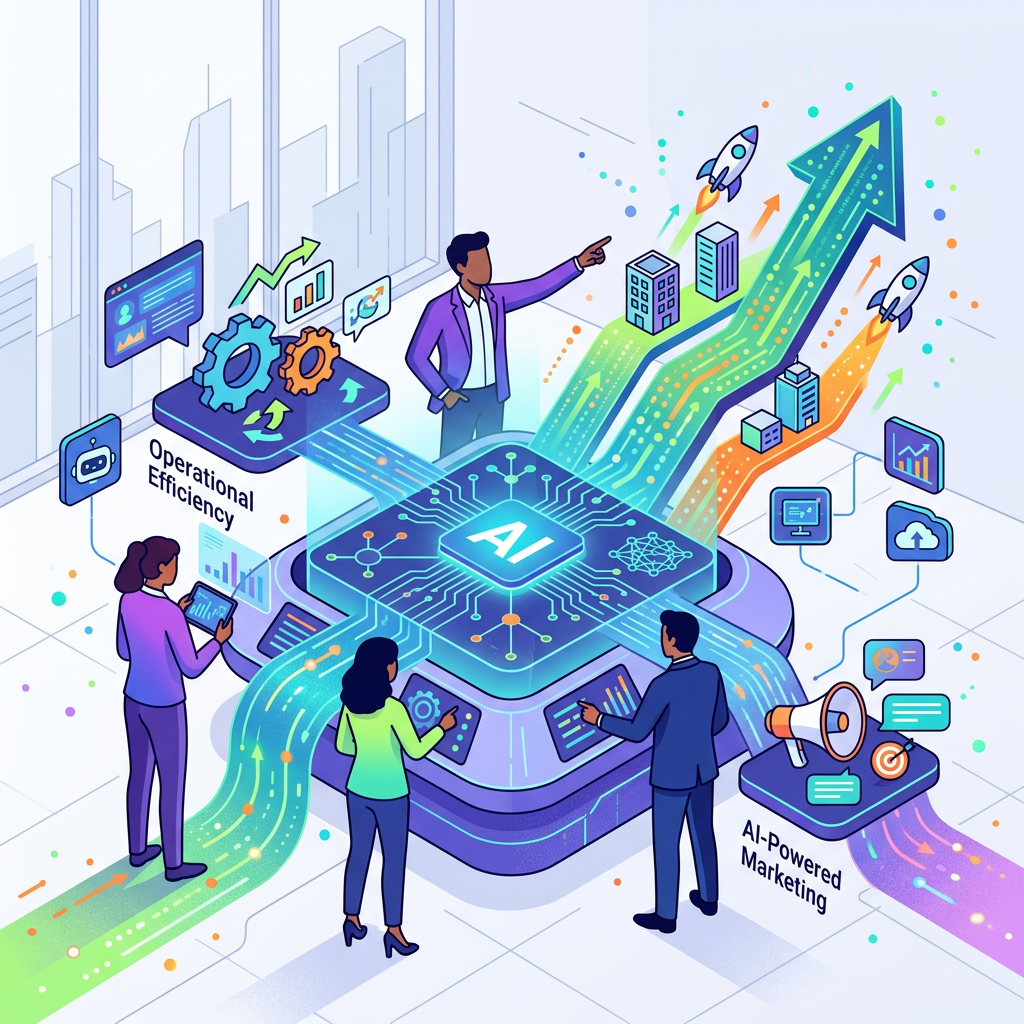
In 2026, artificial intelligence (AI) has become a cornerstone of business strategy, marketing, and productivity. Entrepreneurs and small business owners are leveraging AI to streamline operations, enhance customer engagement, and drive growth. This article explores the latest AI tools and platforms that are transforming the business landscape, with a focus on practical applications for real-world scenarios.
The Rise of AI in Business
AI technologies have evolved from experimental concepts to essential components of business operations. Companies of all sizes are adopting AI to gain a competitive edge, improve decision-making, and optimize processes. The integration of AI into business practices is no longer a luxury but a necessity for staying relevant in today's fast-paced market.
Key AI Tools Transforming Business Operations
Several AI platforms have emerged, offering innovative solutions to common business challenges:
YouWare: Natural Language Web App Builder
Launched in March 2025, YouWare enables users to build web applications through natural language prompts. Within eight months, it attracted over 500,000 monthly active users, demonstrating the demand for accessible AI-driven development tools. Small business owners can utilize YouWare to create customized web applications without extensive coding knowledge, accelerating digital transformation efforts.
Glean Technologies: AI-Powered Enterprise Search
Glean Technologies specializes in enterprise-grade AI and search capabilities. Its platform integrates with workplace applications to index company data and provide permission-aware results. By implementing Glean, businesses can enhance internal knowledge sharing, improve decision-making, and boost productivity by ensuring employees have quick access to relevant information.
IBM Watsonx: AI Platform for Business Applications
IBM's Watsonx is an AI platform designed for building and managing AI applications tailored for business use. It includes watsonx.ai for training and deploying AI models, watsonx.data for data management, and watsonx.governance for ensuring compliance. These tools enable businesses to develop AI solutions that are secure, scalable, and aligned with industry standards. For instance, IBM's collaboration with the EY organization led to the creation of EY.ai for tax, an AI-powered solution that automates tax compliance and streamlines global data management. (newsroom.ibm.com)
KModels: Simplifying AI Integration for Businesses
KModels offers a framework to integrate AI into existing business applications, supporting both AI developers and consumers with transportable model templates. This approach simplifies the adoption of AI technologies, allowing businesses to enhance their applications with AI capabilities without starting from scratch.
FinRobot: Generative AI Agents for Finance ERP
FinRobot presents Generative Business Process AI Agents for ERP systems, aiming to automate complex financial tasks like budget planning and reporting. By incorporating FinRobot's AI agents, businesses can reduce manual errors, improve financial forecasting, and allocate resources more effectively.
Practical Takeaways for Small Business Owners
Integrating AI into your business operations can lead to significant improvements in efficiency and competitiveness. Here are some actionable steps:
-
Assess Your Business Needs: Identify areas where AI can add value, such as customer service, inventory management, or marketing analytics.
-
Explore AI Tools: Evaluate platforms like YouWare, Glean Technologies, IBM Watsonx, KModels, and FinRobot to determine which solutions align with your business objectives.
-
Start Small: Implement AI solutions in phases, beginning with pilot projects to test their effectiveness before full-scale deployment.
-
Invest in Training: Ensure your team has the necessary skills to work with AI tools, either through formal training programs or self-paced learning.
-
Monitor and Iterate: Regularly assess the performance of AI applications and make adjustments to optimize outcomes.
Conclusion
The integration of AI into business operations is a game-changer for entrepreneurs and small business owners. By leveraging AI tools and platforms, businesses can enhance productivity, improve decision-making, and drive growth. Staying informed about the latest AI developments and strategically implementing them can position your business for success in the evolving digital landscape.
Tags
- AI in Business
- Business Strategy
- Entrepreneurship
- Productivity Tools
- AI Integration
- Small Business Growth