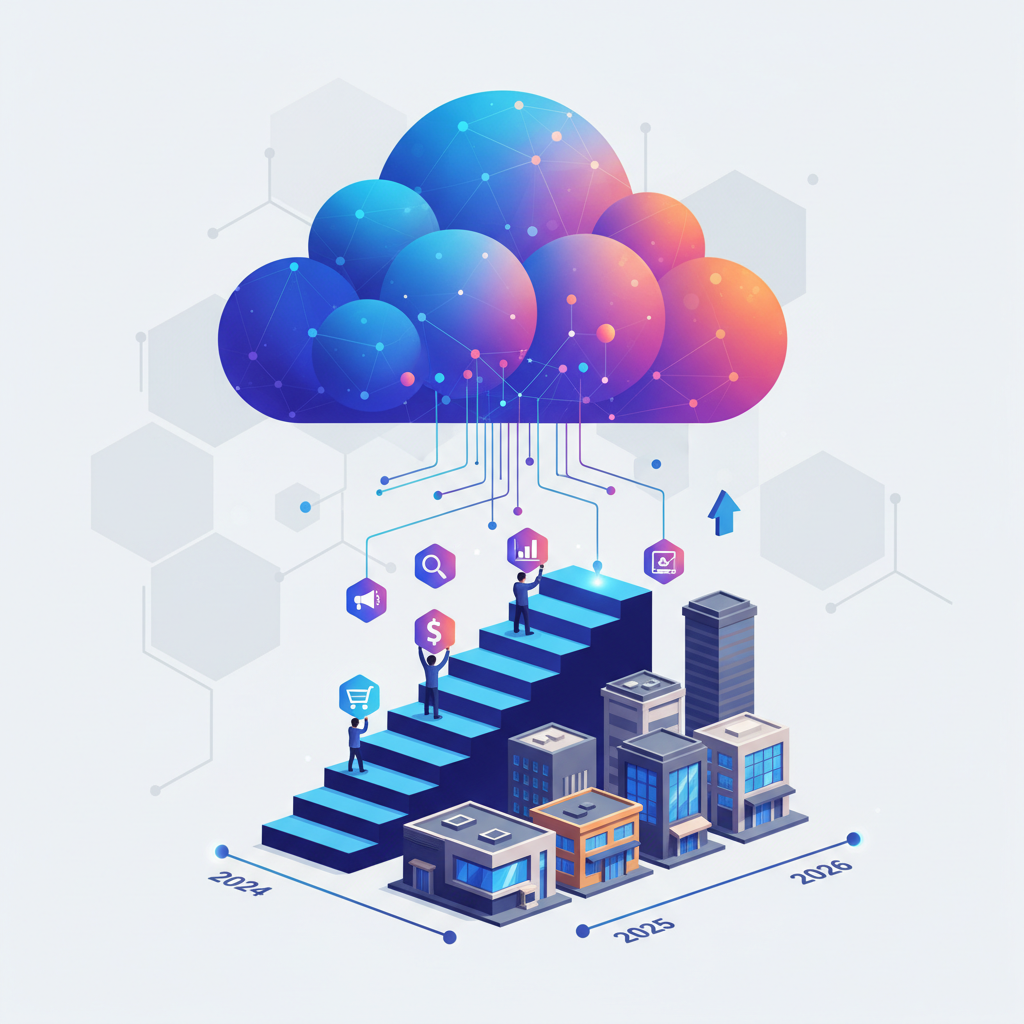
In 2026, small businesses are leveraging cloud computing, Software as a Service (SaaS) platforms, and remote work tools to achieve unprecedented scalability and efficiency. These technologies offer flexible, cost-effective solutions that enable businesses to adapt swiftly to market changes and customer demands.
The Evolution of Cloud Computing and SaaS Platforms
Cloud computing has transformed the way businesses operate by providing scalable and on-demand access to computing resources. SaaS platforms, a subset of cloud computing, deliver software applications over the internet, eliminating the need for on-premises infrastructure and reducing maintenance costs. This model allows small businesses to access enterprise-grade tools without significant upfront investments.
Infrastructure as a Service (IaaS): Building a Robust Foundation
IaaS provides virtualized computing resources over the internet, offering businesses the flexibility to scale their infrastructure based on demand. This approach is particularly beneficial for small businesses aiming to expand without the burden of managing physical hardware. By adopting IaaS, companies can focus on innovation and growth while ensuring their infrastructure supports their evolving needs.
Remote Work Tools: Enhancing Collaboration and Productivity
The rise of remote work has underscored the importance of effective collaboration tools. Platforms like Slack, Microsoft Teams, and Zoom facilitate seamless communication among team members, regardless of their physical location. These tools not only enhance productivity but also support a flexible work environment, which is crucial for attracting and retaining talent in today's competitive market.
Recent Innovations Empowering Small Businesses
Recent developments in the cloud space have introduced innovative solutions tailored for small businesses:
-
YouWare: Launched in March 2025, YouWare enables users to build web applications through natural language prompts. Within eight months, it has attracted over 500,000 monthly active users, demonstrating the growing demand for accessible development tools.
-
Glean Technologies: Specializing in enterprise-grade AI and search capabilities, Glean integrates with workplace applications to index company data and provide permission-aware results. This integration enhances data accessibility and decision-making processes for small businesses.
-
IBM Watsonx: IBM's Watsonx platform offers a suite of AI tools for building and managing business applications. It includes watsonx.ai for training and deploying AI models, watsonx.data for data management, and watsonx.governance for ensuring compliance. These tools empower small businesses to harness AI capabilities effectively.
Practical Takeaway for Small Business Owners
To leverage the full potential of cloud computing and SaaS platforms, small business owners should:
-
Assess Business Needs: Identify areas where cloud solutions can enhance efficiency, such as customer relationship management, accounting, or project management.
-
Choose Scalable Solutions: Opt for cloud services that offer scalability to accommodate future growth without significant additional costs.
-
Invest in Security: Ensure that chosen platforms adhere to robust security standards to protect sensitive business data.
-
Train Employees: Provide training to staff on utilizing cloud tools effectively, fostering a culture of innovation and adaptability.
By strategically integrating cloud technologies, small businesses can enhance operational efficiency, foster innovation, and position themselves for sustained growth in the dynamic market landscape of 2026.
Tags
- Cloud Computing
- SaaS Platforms
- Small Business Growth
- Remote Work Tools
- AI Integration
- Business Scalability